





Spider VS Varicose Veins: What are the Differences?
While many people use the terms “varicose veins” and “spider veins” interchangeably, they are not the same and require unique treatments. Both types of diseased veins respond well to outpatient treatment, making their removal accessible for all.Â
What are Spider Veins and Varicose Veins?Â
Spider veins and varicose veins occur when the walls of blood vessels become damaged. They have different causes and treatments, but a vein specialist like Dr. Robert Cutchen can diagnose and thoroughly treat both types.
While many people use the terms “varicose veins” and “spider veins” interchangeably, they are not the same and require unique treatments. Both types of diseased veins respond well to outpatient treatment, making their removal accessible for all.Â
What are Spider Veins and Varicose Veins?Â
Spider veins and varicose veins occur when the walls of blood vessels become damaged. They have different causes and treatments, but a vein specialist like Dr. Robert Cutchen can diagnose and thoroughly treat both types.
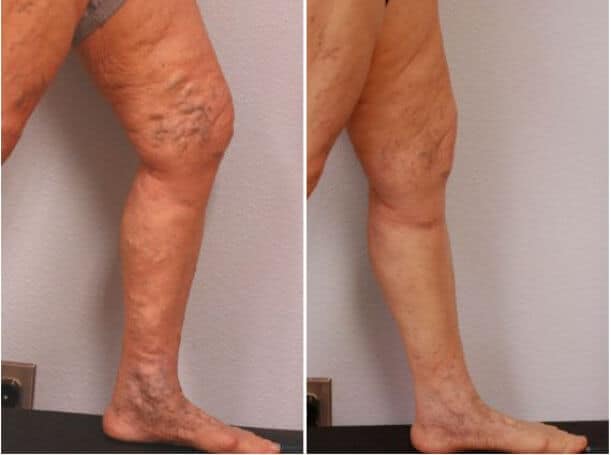
*Individual results may vary.
Spider vs. Varicose Veins: What are the Differences?
Spider veins and varicose veins have several notable differences, including:
Appearance
Spider veins usually look like discolored webs or branches just under the skin. They are less than 1mm in diameter. Varicose veins are often raised and may look like twisted, bulging ropes. Both types of problem veins can be blue, purple, or red.Â
Location
Varicose veins usually occur on the legs. Because blood returning from the legs must flow against gravity, these veins become prone to damage over time. Spider veins often occur in clusters, frequently on the legs and even the face.Â
Causes
Spider veins are superficial veins damaged and expanded by pressure. They are usually cosmetic in nature, but clusters around the ankles can be symptomatic of deeper issues. Varicose veins form when deeper veins in the leg, usually the Greater Saphenous Vein, become damaged. They can become symptomatic and will not improve without treatment.
Spider vs. Varicose Veins: What are the Differences?
Spider veins and varicose veins have several notable differences, including:
Appearance
Spider veins usually look like discolored webs or branches just under the skin. They are less than 1mm in diameter. Varicose veins are often raised and may look like twisted, bulging ropes. Both types of problem veins can be blue, purple, or red.Â
Location
Varicose veins usually occur on the legs. Because blood returning from the legs must flow against gravity, these veins become prone to damage over time. Spider veins often occur in clusters, frequently on the legs and even the face.Â
Causes
Spider veins are superficial veins damaged and expanded by pressure. They are usually cosmetic in nature, but clusters around the ankles can be symptomatic of deeper issues. Varicose veins form when deeper veins in the leg, usually the Greater Saphenous Vein, become damaged. They can become symptomatic and will not improve without treatment.
Request a Consultation
Simply fill out the form on this page, and one of our highly trained staff members at Albuquerque Vein & Laser Institute will reach out to your promptly to schedule your appointment.
How are Spider Veins and Varicose Veins Treated?Â
Dr. Cutchen has several options to choose from when treating your problem veins. After reviewing your medical history and a visual exam, Dr. Cutchen will determine whether you need additional diagnostic ultrasound testing that will identify issues within your venous system. Spider vein treatment is rarely covered by insurance, as they are considered cosmetic in nature, while varicose vein treatment is frequently covered by most insurance plans when deemed medically necessary (eg: presence of venous reflux, pain, swelling, etc.).Â
Sclerotherapy
Dr. Cutchen often uses sclerotherapy to treat spider veins on the legs. A sclerosing agent is injected into the vein, causing the vein walls to scar and collapse, fading the appearance of the spider veins.
Veinwave
This is the primary methodology that Dr. Cutchen uses to treat the tiniest of spider veins often found on the face/nose. It uses a thin filament placed under the skin next to a spider vein, and a pulse of radiofrequency energy targets and closes the vein. The energy used is much more gentle than laser treatment and, therefore, will not damage the sensitive skin in these delicate areas.Â
Endovenous Laser Treatment
An Endovenous Laser Treatment (EVLA) is considered the “gold standard” in varicose vein treatment when it’s the result of the presence of venous reflux within the Greater Saphenous Vein. A thin laser fiber is inserted into the vein, heating the vein wall and causing it to collapse. This treatment addresses the underlying cause of most other leg vein problems.Â
Endovenous Chemical Ablation
This form of sclerotherapy uses ultrasound imaging to guide a needle into a varicose vein and inject a sclerosant foam. This foam causes damage to the vein, which will collapse and fade away.Â
Ambulatory Phlebectomy
This procedure removes the visible bulging varicose veins that are too large to simply be reabsorbed by the body. Using tiny tools, Dr. Cutchen hooks the vein and pulls it out through tiny incisions. This causes the bulging vein to disappear immediately, and is typically performed after an Endovenous Laser Ablation.Â
How are Spider Veins and Varicose Veins Treated?Â
Dr. Cutchen has several options to choose from when treating your problem veins. After reviewing your medical history and a visual exam, Dr. Cutchen will determine whether you need additional diagnostic ultrasound testing that will identify issues within your venous system. Spider vein treatment is rarely covered by insurance, as they are considered cosmetic in nature, while varicose vein treatment is frequently covered by most insurance plans when deemed medically necessary (eg: presence of venous reflux, pain, swelling, etc.).Â
Sclerotherapy
Dr. Cutchen often uses sclerotherapy to treat spider veins on the legs. A sclerosing agent is injected into the vein, causing the vein walls to scar and collapse, fading the appearance of the spider veins.
Veinwave
This is the primary methodology that Dr. Cutchen uses to treat the tiniest of spider veins often found on the face/nose. It uses a thin filament placed under the skin next to a spider vein, and a pulse of radiofrequency energy targets and closes the vein. The energy used is much more gentle than laser treatment and, therefore, will not damage the sensitive skin in these delicate areas.Â
Endovenous Laser Treatment
An Endovenous Laser Treatment (EVLA) is considered the “gold standard” in varicose vein treatment when it’s the result of the presence of venous reflux within the Greater Saphenous Vein. A thin laser fiber is inserted into the vein, heating the vein wall and causing it to collapse. This treatment addresses the underlying cause of most other leg vein problems.Â
Endovenous Chemical Ablation
This form of sclerotherapy uses ultrasound imaging to guide a needle into a varicose vein and inject a sclerosant foam. This foam causes damage to the vein, which will collapse and fade away.Â
Ambulatory Phlebectomy
This procedure removes the visible bulging varicose veins that are too large to simply be reabsorbed by the body. Using tiny tools, Dr. Cutchen hooks the vein and pulls it out through tiny incisions. This causes the bulging vein to disappear immediately, and is typically performed after an Endovenous Laser Ablation.Â
Take the Next Step
If you want to learn more about spider veins and varicose veins, contact us at Albuquerque Vein & Laser Institute at 505-848-8346, or complete the form on this page, and one of our staff members will reach out to you promptly.Â
Albuquerque Vein & Laser Institute is located in the Journal Center area of Albuquerque and proudly serves vein patients throughout the entire Albuquerque area, as well as Rio Rancho, Santa Fe, Santa Rosa, Los Lunas, and other areas throughout New Mexico.
** This blog provides general information and discussion about medicine, health, and related subjects. The words and other content provided in this blog, and in any linked materials, are not intended and should not be construed as medical advice. If the reader or any other person has a medical concern, he or she should consult with an appropriately licensed physician.
Related Posts