





Your Spider Vein Treatment Options
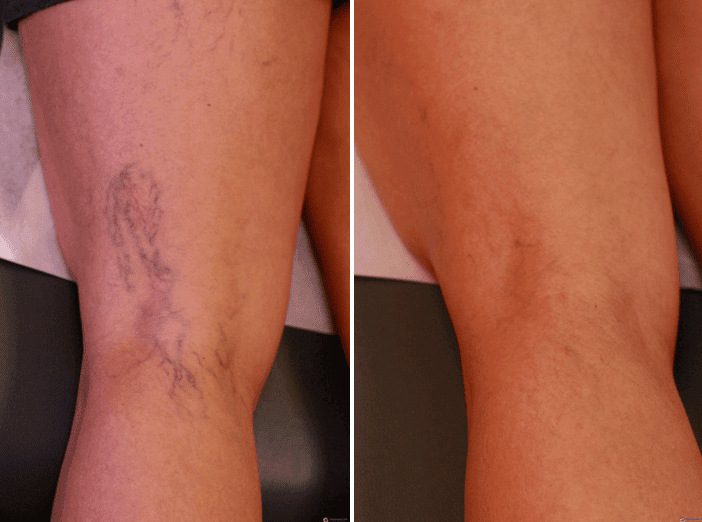
Unfortunately, the term spider vein is no stranger to many women, as about 50 percent of women in the United States have a vein condition, whether it is spider veins, varicose veins or both. If you only have spider veins, you have the lesser of the two vein problems, but that can be small consolation if their appearance causes you unhappiness. Fortunately, there are non-invasive vein treatments for this condition, which is often hereditary.
*Individual results may vary.
Spider veins are small red, purple or blue veins that can easily be seen on the surface of the skin. They are most commonly found on the legs and ankles but can also be found on other parts of the body. Unlike varicose veins, which are also common and are deeper and larger than spider veins, often causing discomfort, spider veins are more cosmetic in nature, though I can identify their exact source at my Albuquerque vein center and determine if they are related to a more serious venous disease.
Currently, spider veins are either treated with sclerotherapy or thermocoagulation (heat).
Sclerotherapy is the gold standard in spider vein treatment. It’s a relatively simple treatment that involves injecting a solution directly into the vein. This damages the vein and causes the vein to close, and the vein will begin to disappear over a period of three to six weeks. Typical spider vein patients need 4-6 treatments spaced 4-6 weeks apart for optimal results. Each treatment session typically lasts 25 minutes.
Spider veins are small red, purple or blue veins that can easily be seen on the surface of the skin. They are most commonly found on the legs and ankles but can also be found on other parts of the body. Unlike varicose veins, which are also common and are deeper and larger than spider veins, often causing discomfort, spider veins are more cosmetic in nature, though I can identify their exact source at my Albuquerque vein center and determine if they are related to a more serious venous disease.
Currently, spider veins are either treated with sclerotherapy or thermocoagulation (heat).
Sclerotherapy is the gold standard in spider vein treatment. It’s a relatively simple treatment that involves injecting a solution directly into the vein. This damages the vein and causes the vein to close, and the vein will begin to disappear over a period of three to six weeks. Typical spider vein patients need 4-6 treatments spaced 4-6 weeks apart for optimal results. Each treatment session typically lasts 25 minutes.
Request a Consultation
Simply fill out the form on this page, and one of our highly trained staff members at Albuquerque Vein & Laser Institute will reach out to your promptly to schedule your appointment.
Surface Lasers use heat energy to cause damage to the veins, resulting in the collapse of the vein. Surface lasers work great on the face, but this is not my first choice for spider veins on the legs. Laser treatment tends to be much more expensive, much more painful, and in some cases is less effective than injection sclerotherapy.
Veinwave is a new treatment modality that utilizes a handpiece with a very fine needle attached. That needle is placed just under the top skin layer, next to the vein, and a small radiofrequency energy pulse is delivered to the vein. This heats the vein and collapses it. Vein wave is amazing for treating fine facial veins.
Albuquerque Vein & Laser Institute has the expertise and knowledge to perform both sclerotherapy and Veinwave spider vein treatments within a protocol that will deliver your best possible cosmetic results.
Surface Lasers use heat energy to cause damage to the veins, resulting in the collapse of the vein. Surface lasers work great on the face, but this is not my first choice for spider veins on the legs. Laser treatment tends to be much more expensive, much more painful, and in some cases is less effective than injection sclerotherapy.
Veinwave is a new treatment modality that utilizes a handpiece with a very fine needle attached. That needle is placed just under the top skin layer, next to the vein, and a small radiofrequency energy pulse is delivered to the vein. This heats the vein and collapses it. Vein wave is amazing for treating fine facial veins.
Albuquerque Vein & Laser Institute has the expertise and knowledge to perform both sclerotherapy and Veinwave spider vein treatments within a protocol that will deliver your best possible cosmetic results.
Take the Next Step
If you are ready to treat your Spider Veins, then it’s time to take the next step by calling our trusted staff at Albuquerque Vein & Laser Institute at 505-848-VEIN or fill out the form on this page and one of our staff members will reach out to you promptly.
Albuquerque Vein & Laser Institute is located in the Journal Center area of Albuquerque and proudly serves vein patients throughout the entire Albuquerque area, as well as Rio Rancho, Santa Fe, Santa Rosa, Los Lunas, and other areas throughout New Mexico.
**This blog provides general information and discussion about medicine, health, and related subjects. The words and other content provided in this blog, and in any linked materials, are not intended and should not be construed as medical advice. If the reader or any other person has a medical concern, he or she should consult with an appropriately licensed physician.
** This blog provides general information and discussion about medicine, health, and related subjects. The words and other content provided in this blog, and in any linked materials, are not intended and should not be construed as medical advice. If the reader or any other person has a medical concern, he or she should consult with an appropriately licensed physician.
Related Posts