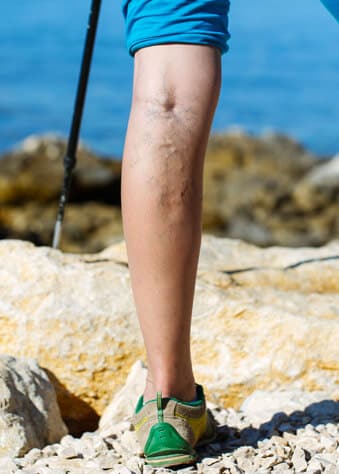

Deep Vein Thrombosis (DVT) is a common and serious medical condition that occurs in approximately 2 million Americans each year. Deep vein thrombosis is a blood clot (thrombus) that forms in one or more of the deep veins in the body – usually in the legs.
A DVT is a blood clot that forms in a vein deep inside the body – usually the leg. Symptoms can include pain, swelling, tenderness, discoloration of the affected area, and skin that is warm to the touch. The greatest concern with DVT is that the clot may come loose and travel to the lungs, which is known as a Pulmonary Embolism and can be fatal. There are many risk factors for DVT, including prior DVT, family history of DVT, prolonged bed rest, surgery, pregnancy, long-distance travel, limb immobilization, chronic lung disease, venous reflux, and autoimmune disease. This condition is generally diagnosed via a duplex venous ultrasound.
After performing a Doppler ultrasound on your affected leg(s) to determine the presence of deep vein thrombosis, Dr. Cutchen will recommend a treatment protocol based on his findings. If the patient presents with DVT, he will typically recommend a combination of anticoagulation medications, compression stockings, and walking.
Patients with DVT are seen for routine follow-up for 3-12 months in most cases. Some clots resolve quickly, while others may never completely resolve and can result in chronic occlusion, scarring, or narrowing of the deep vein. Current guidelines recommend patients wear compression stockings for two years after diagnosis of DVT.
A DVT is a blood clot that forms in a vein deep inside the body – usually the leg. Symptoms can include pain, swelling, tenderness, discoloration of the affected area, and skin that is warm to the touch. The greatest concern with DVT is that the clot may come loose and travel to the lungs, which is known as a Pulmonary Embolism and can be fatal. There are many risk factors for DVT, including prior DVT, family history of DVT, prolonged bed rest, surgery, pregnancy, long-distance travel, limb immobilization, chronic lung disease, venous reflux, and autoimmune disease. This condition is generally diagnosed via a duplex venous ultrasound.
After performing a Doppler ultrasound on your affected leg(s) to determine the presence of deep vein thrombosis, Dr. Cutchen will recommend a treatment protocol based on his findings. If the patient presents with DVT, he will typically recommend a combination of anticoagulation medications, compression stockings, and walking.
Patients with DVT are seen for routine follow-up for 3-12 months in most cases. Some clots resolve quickly, while others may never completely resolve and can result in chronic occlusion, scarring, or narrowing of the deep vein. Current guidelines recommend patients wear compression stockings for two years after diagnosis of DVT.
If you would like to schedule a consultation to see if you have Deep Vein Thrombosis or Venous Reflux, please call our office at (505) 848-8346 today or complete the form on this page and one of our trusted staff members will reach out to you promptly.